Comfort Food, Far From Home
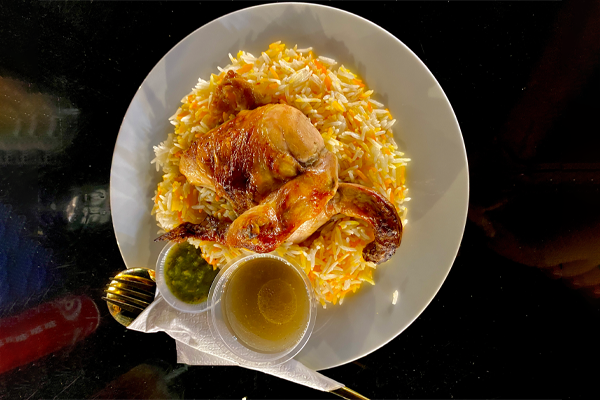
Home » Treat » Comfort Food, Far From Home Food & Drinks Comfort Food, Far From Home Table of Contents A fortnight in Malaysia taught me that comfort food has nothing to do with authenticity — and everything to do with not having to figure anything out. By Travel Treat Together6 min readKuala Lumpur · Penang We’d been on the road for almost two weeks, living out of one bag, when the tiredness stopped being physical and started being the kind that makes you miss things you don’t usually think about. It wasn’t homesickness, exactly. Nobody misses their own kitchen this dramatically. It was smaller than that, and more constant: the low hum of always having to decide something. Which bus. Which queue. Which menu. Whether the thing on the plate is going to be too spicy, and whether asking is going to make you look like a tourist. Two weeks of small decisions piles up in a way that sleep can’t fix. What I didn’t expect was that the cure would show up three times, in three plates, in three cities — and that none of them would look anything like the food I grew up with. The plate that shouldn’t have worked It was a plate of ayam masak merah at a small kopitiam in Kuala Lumpur — chicken cooked down in a sweet, chilli-red gravy — that did it. Nothing about the ingredients matched anything from home. The sweetness of the gravy did. Nothing about the ingredients matched anything from home. Not the chicken, not the gravy, not the way it was spooned over rice at nine in the morning, next to a glass of iced tea that came out of a plastic jug. And yet the sweetness of the sauce, the way it sat over warm rice, hit the exact same note as a Sunday lunch back in India. The same note. Different song. We went back to that same kopitiam three more times that trip — not because it was the best version of the dish in the city, but because it was the one that felt familiar. That distinction matters more than I knew then. When you’re far from home, you’re not hunting for the best food. You’re hunting for the food that doesn’t ask you to be brave. We went back three more times — not because it was the best version of the dish in the city, but because it was the one that felt familiar. Twenty minutes that didn’t matter A few days later we were in Penang, and the tiredness caught up properly. That night we ended up at a roadside stall eating banana leaf rice with our hands, and for twenty minutes none of it mattered. Not the bag, not the laundry, not the itinerary we’d been quietly arguing about since Alor Setar. There was rice, and there was curry, and there was the specific, unglamorous business of eating with your fingers, which takes just enough attention to leave no room for anything else. Banana leaf rice, a roadside stall, and twenty minutes where nothing else needed deciding. It wasn’t the food that fixed it. It was that it tasted like something we didn’t have to figure out. Something that came with instructions already folded into it — scoop, mix, eat, repeat. The stall did the thinking. We just sat there doing the eating. I’ve thought about that a lot since. Comfort food is usually described as a flavour. I think it’s closer to a grammar. You don’t have to be fluent in it. You just have to not be translating. Pasta, of all things Then it rained. We walked into a random cafe in George Town mostly to get out of the rain, and ended up ordering a creamy chicken pasta off a menu that had nothing to do with Malaysian food at all. Penne, a pale cream sauce, sliced chicken, too much black pepper. The kind of thing I would never have ordered at home, and would probably have described as boring if you’d shown it to me a week earlier. Rain on the shophouses, a plate of pasta, and the best thing we ate that day. It was perfect. It wasn’t trying to be authentic to anywhere. It was just a warm, simple plate at the right moment, in a city we’d never planned to eat pasta in. We sat by the window with the rain coming down on the shophouses outside and the street turning into a grey smear of umbrellas and headlights, and I remember thinking: this is the whole point, isn’t it. Sometimes the best comfort food finds you exactly because you weren’t looking for it. What I’d tell someone else, travelling hungry If you’re planning a trip and hoping to eat your way through it, three small things I’d pass on: Eat what the next table is eating. Not what the blog said, not what the laminated menu recommends. The aunty two seats over already did the research for you, for free, for years. Go back to the same place twice. Repetition is what turns a meal into a ritual, and a ritual into memory. The second visit is when they start to remember your order. The third is when the place starts to feel like it belongs to you a little. Let the weather decide for you. Rain changes the answer. Heat changes the answer. The best plate of the trip is almost never the one you booked — it’s the one you walked into because you needed somewhere to stand for twenty minutes. Somewhere between a kopitiam in Kuala Lumpur and a rainy cafe in George Town, I stopped being a visitor at a table and started being a person having lunch. Which is, I think, the whole trick of comfort food: it doesn’t take you home. It just stops asking you to be anywhere else. That’s what I’ll take from this trip. Not the recipe. The twenty minutes.
The Food and Drinks We Keep Coming Back For
Food & Drinks The Food and Drinks We Keep Coming Back For Table of Contents Some of my favourite travel memories are not always about famous landmarks or beautiful viewpoints. Sometimes they come from a small food stall, a plastic cup of something cold, or a simple meal bought from the street. As a traveller who genuinely loves food, I enjoy discovering the everyday tastes of a place—the food people eat on their way to work, the drinks they grab after walking for hours, and the small treats that somehow stay in your memory long after the trip. Street Desserts We Love When I think about desserts in Southeast Asia, one that I would love to discover in Vietnam is Chè ba màu, the colourful Vietnamese three-colour dessert. It is traditionally made with sweet beans, jelly, coconut milk and crushed ice, making it especially refreshing in Vietnam’s warm weather. Chè itself is a huge part of Vietnamese street-dessert culture and comes in many different varieties. I love the idea of finding a small chè stall while walking through the streets of Ho Chi Minh City, ordering a colourful glass and simply enjoying it while watching the city go by. It feels like exactly the kind of dessert that belongs to the street rather than a fancy restaurant. For me, desserts are about discovering something new. I want to sit somewhere simple, try the local flavours and remember not only what it tasted like, but where I was when I discovered it. Meals Worth the Mess The street food I always remember from Thailand is mango sticky rice and mango/papaya salad. I especially enjoy finding it around the stalls behind Silom Road and near Siam Square, where the surrounding streets are full of small food vendors and markets. The combination of sweet mango, sticky rice and coconut sauce is simple, but somehow incredibly satisfying. Closer to home, I also love ayam rendang with rice from the small morning food sellers around Masjid Jamek, and petaling Street also near the train and metro stations in Kuala Lumpur. These simple home-style meals are often prepared early in the morning for people heading to work. What makes these meals special to me is their simplicity. You buy a small pack of rice and chicken rendang in the morning, eat it on the way or at lunch, and somehow the taste stays with you throughout the day. That is the kind of food memory I love and cherish. Drinks That Keep Us Going My favourite drink is cham, the Malaysian combination of tea and coffee. I can easily find a good cup around places such as Central Market and the surrounding streets of Kuala Lumpur. Bumbu Babah – Pasar Seni, KL also have many street vendors who sell refreshing drinks and mostly you have 30 plus options to choose between fresh, hot and cold drinks. After walking through Central Market, Masjid Jamek or the nearby streets, stopping for a cold or iced lime with black tea (Teh O Limau) is one of those little travel pleasures that keeps me going. It is simple, familiar and refreshing. For me, these local drinks are more than just a drink. It is part of the journey—something I can enjoy while resting my feet, watching people pass by and deciding where to explore next. Final Thoughts Food is one of the biggest reasons I enjoy travelling. From mango sticky rice in Bangkok and chè in Vietnam to a simple morning packet of ayam rendang in Kuala Lumpur, these are the tastes that connect me to a place. They may not be fancy meals, but they become part of the story of the journey—and those are the food memories I keep coming back for. Continue Reading Good Treat is Everything Learn more Traveling Turns You Into a Good Storyteller Learn more Art & Culture Learn more Travel Blog Tips Learn more Southeast Asia Called, and I Answered Every Time Learn more Explore Your Favourite Destinations Learn more
Good Treat is Everything
Stories A Good Treat Is Everything — So Share It with the Ones You Love Why the best stories in the world come from people who have been somewhere Think About It for a Second Who is the most interesting person at a dinner table? It is almost never the person who stayed home. It is the one who went somewhere. The one who got lost in a foreign city, ate something strange, missed a train, met a stranger, or watched a sunset from a rooftop they were not supposed to be on. That person has stories. And stories are the most powerful thing a human being can share. Travel does not just change where you go. It changes how you see, how you feel, and most importantly — how you talk about the world. What Is a Good Storyteller? Before we talk about travel, let us understand what makes someone a good storyteller. A good storyteller: Makes you feel like you were there Uses details that bring a scene to life Knows how to build tension and surprise Speaks from real emotion — not just facts Makes you laugh, think, or feel something Leaves you wanting to hear more Now here is the thing — travel gives you all of these ingredients automatically. How Travel Builds Your Storytelling 1. Travel Gives You Raw Material You cannot tell stories if nothing has happened to you. Travel fills your life with events — big and small. A delayed flight that led you to meet a fascinating stranger. A wrong turn that took you to the most beautiful street you had ever seen. A local dish that tasted like nothing you could describe but you tried anyway. These moments become your material. Every trip is a library of stories waiting to be told. 2. Travel Teaches You to Notice Details At home, you stop seeing things. Your brain puts life on autopilot. But when you are in a new place, everything is fresh. Your senses wake up. You notice: The color of the walls in an old town The smell of street food in the morning air The sound of a language you do not understand The way a local grandmother laughs The texture of cobblestones under your feet Details are what make stories come alive. And travel is the best training ground for noticing them. 3. Travel Forces You to Talk to Strangers At home, you talk to the same people about the same things. Travel pushes you out of that comfort zone. You ask for directions. You share a table with someone you just met. You try to communicate with someone who speaks a different language. You listen to a guide, a local shopkeeper, a fellow traveler. Every conversation is a lesson in human connection. You learn how people think differently. You collect their perspectives. And those perspectives make your stories richer and more interesting. 4. Travel Gives You Conflict and Tension Every great story has a problem. Something that went wrong. A moment of uncertainty or fear. Travel delivers this naturally: Getting lost in an unfamiliar city Missing a bus in the middle of nowhere Falling sick far from home Running out of money unexpectedly Facing a cultural misunderstanding These are frustrating when they happen. But they become the best stories later. The harder the moment, the better the story. 5. Travel Gives You Emotional Depth You cannot fake emotion in a good story. People can tell. But when you have stood at the edge of a mountain and felt tiny. When you have sat in a quiet temple and felt unexpectedly moved. When you have shared food with strangers and felt an overwhelming sense of belonging — that emotion is real. It lives in you. When you tell those stories, the emotion comes through. And that is what keeps people listening. 6. Travel Expands Your Vocabulary of Experience A person who has never left their city only knows one kind of rain, one kind of traffic, one kind of market, one kind of morning. A traveler knows a hundred versions of everything. They know what silence sounds like in a Scandinavian forest versus a Saharan desert. They know the difference between city chaos in Mumbai and city chaos in Tokyo. They know how “hospitality” feels completely different in Morocco versus rural Japan. This wide vocabulary of experience means when you describe something — you describe it better. With more depth. With comparison. With truth. 7. Travel Makes You Comfortable with Uncertainty Good storytellers are confident. They are comfortable not knowing how the story will land. They are willing to go to unexpected places in their narrative. Travel trains exactly this skill. When you travel, especially alone or off the beaten path, you learn to be okay with not knowing what comes next. You get comfortable with the unknown. That confidence shows up when you tell stories. You are not afraid to pause, to digress, to let the story breathe. The Types of Travel Stories People Love Most Not all travel stories are equal. The ones that stick with people tend to fall into these types: The “I Was Wrong” Story You expected one thing. You found something completely different. This is powerful because it shows growth. “I thought it would be touristy and shallow. But I ended up in a conversation with a fisherman that changed how I think about hard work.” The “Things Went Wrong” Story The disaster that became an adventure. Everyone loves these because they are honest and funny. “We missed our flight, lost our luggage, and ended up sleeping on an airport bench — and honestly, it was the best night of the whole trip.” The “I Felt Small” Story The moment travel reminded you how big the world is and how little you know. “Standing at the base of those ruins, I realised I had been living my whole life in a very small box.” The “Unexpected Kindness” Story A stranger helped
Sand on the Floor, Chicken on Paper: The FOUNDERS Hutton, Penang
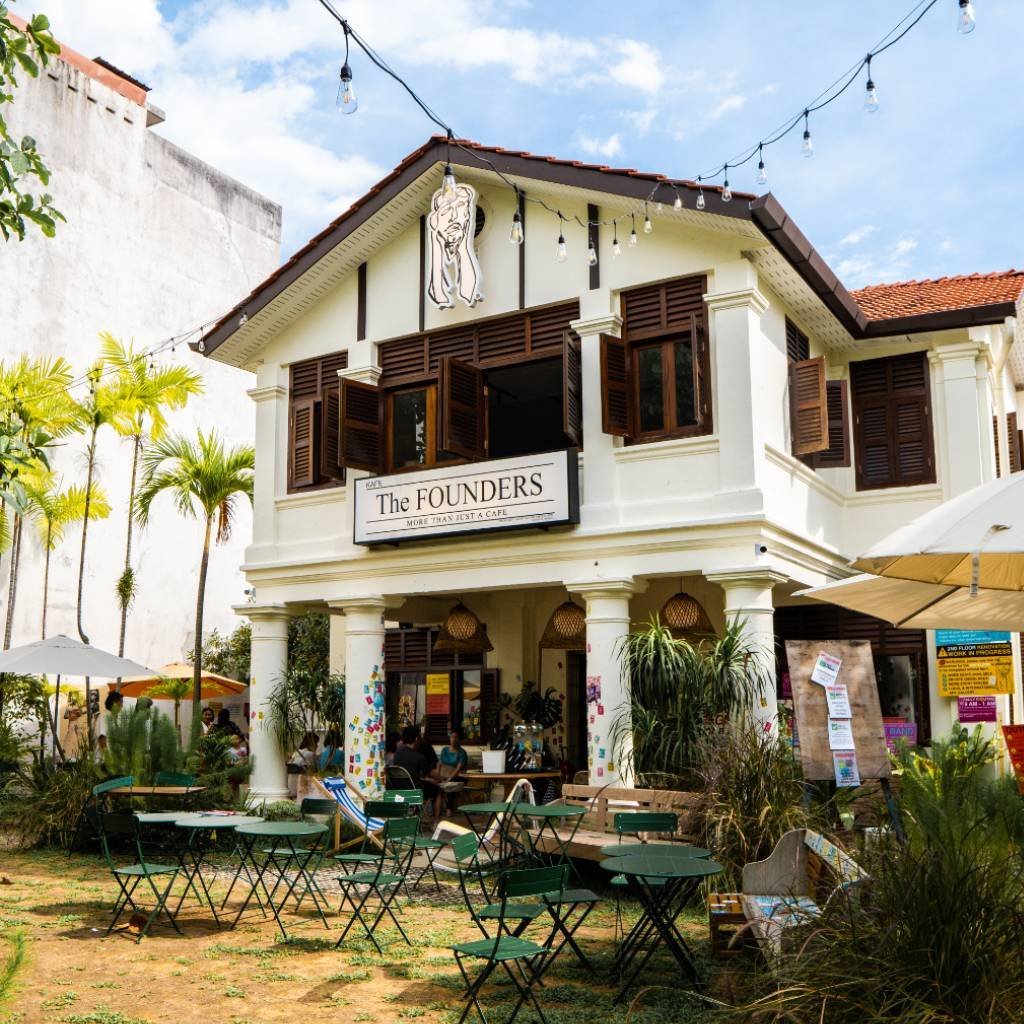
We stopped at this cafe by accident and stayed for hours. A simple look at an afternoon at The FOUNDERS Hutton in Penang: the sand floor, the chilli chicken, prices and tips.