
Why the best stories in the world come from people who have been somewhere
Who is the most interesting person at a dinner table?
It is almost never the person who stayed home. It is the one who went somewhere. The one who got lost in a foreign city, ate something strange, missed a train, met a stranger, or watched a sunset from a rooftop they were not supposed to be on.
That person has stories. And stories are the most powerful thing a human being can share.
Travel does not just change where you go. It changes how you see, how you feel, and most importantly — how you talk about the world.
Before we talk about travel, let us understand what makes someone a good storyteller.
A good storyteller:
Now here is the thing — travel gives you all of these ingredients automatically.

You cannot tell stories if nothing has happened to you.
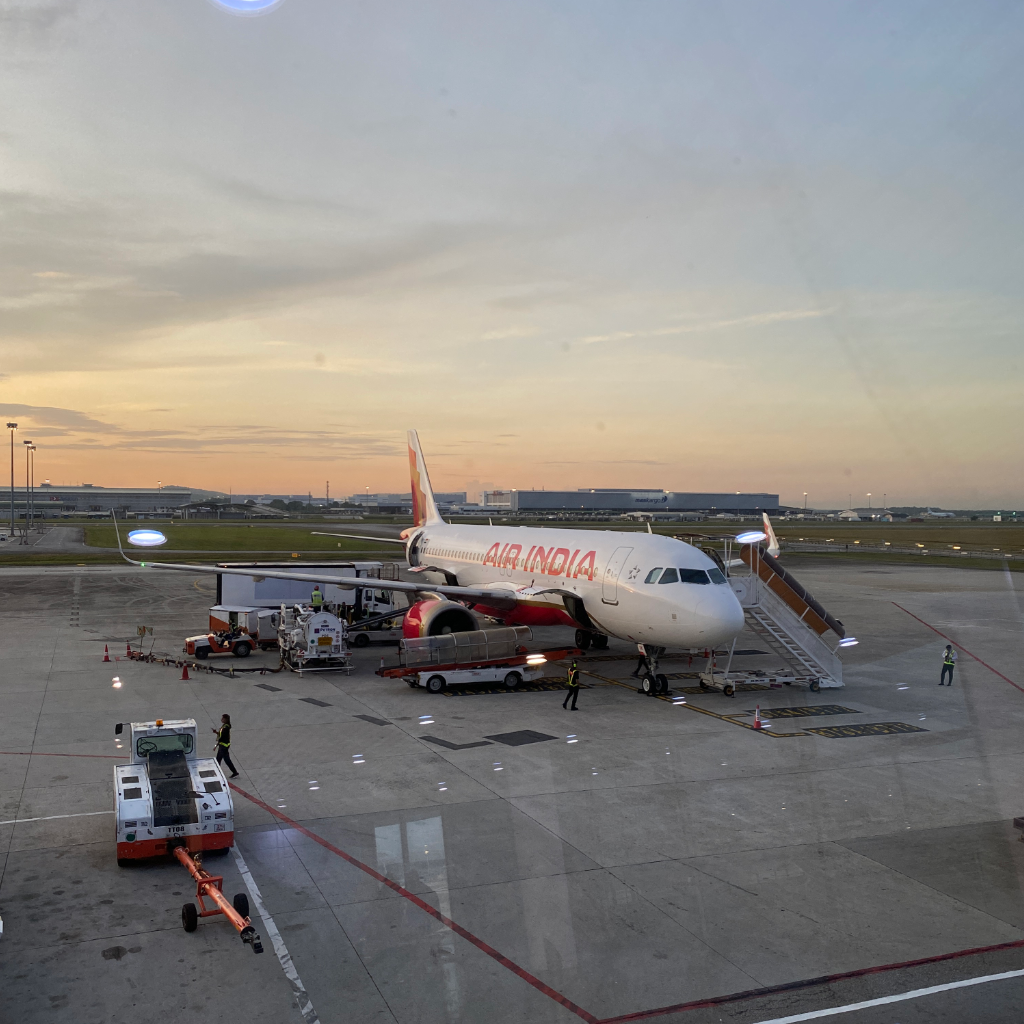
Travel fills your life with events — big and small. A delayed flight that led you to meet a fascinating stranger. A wrong turn that took you to the most beautiful street you had ever seen. A local dish that tasted like nothing you could describe but you tried anyway.
These moments become your material. Every trip is a library of stories waiting to be told.
At home, you stop seeing things. Your brain puts life on autopilot.
But when you are in a new place, everything is fresh. Your senses wake up. You notice:
Details are what make stories come alive. And travel is the best training ground for noticing them.
At home, you talk to the same people about the same things.
Travel pushes you out of that comfort zone. You ask for directions. You share a table with someone you just met. You try to communicate with someone who speaks a different language. You listen to a guide, a local shopkeeper, a fellow traveler.
Every conversation is a lesson in human connection. You learn how people think differently. You collect their perspectives. And those perspectives make your stories richer and more interesting.
Every great story has a problem. Something that went wrong. A moment of uncertainty or fear.
Travel delivers this naturally:
These are frustrating when they happen. But they become the best stories later. The harder the moment, the better the story.
You cannot fake emotion in a good story. People can tell.
But when you have stood at the edge of a mountain and felt tiny. When you have sat in a quiet temple and felt unexpectedly moved. When you have shared food with strangers and felt an overwhelming sense of belonging — that emotion is real. It lives in you.
When you tell those stories, the emotion comes through. And that is what keeps people listening.
A person who has never left their city only knows one kind of rain, one kind of traffic, one kind of market, one kind of morning.
A traveler knows a hundred versions of everything.
They know what silence sounds like in a Scandinavian forest versus a Saharan desert. They know the difference between city chaos in Mumbai and city chaos in Tokyo. They know how “hospitality” feels completely different in Morocco versus rural Japan.
This wide vocabulary of experience means when you describe something — you describe it better. With more depth. With comparison. With truth.
Good storytellers are confident. They are comfortable not knowing how the story will land. They are willing to go to unexpected places in their narrative.
Travel trains exactly this skill. When you travel, especially alone or off the beaten path, you learn to be okay with not knowing what comes next. You get comfortable with the unknown.
That confidence shows up when you tell stories. You are not afraid to pause, to digress, to let the story breathe.
Not all travel stories are equal. The ones that stick with people tend to fall into these types:
You expected one thing. You found something completely different. This is powerful because it shows growth.
“I thought it would be touristy and shallow. But I ended up in a conversation with a fisherman that changed how I think about hard work.”
The disaster that became an adventure. Everyone loves these because they are honest and funny.
“We missed our flight, lost our luggage, and ended up sleeping on an airport bench — and honestly, it was the best night of the whole trip.”
The moment travel reminded you how big the world is and how little you know.
“Standing at the base of those ruins, I realised I had been living my whole life in a very small box.”
A stranger helped you when you least expected it. These are the most moving.
“She didn’t speak any English. Neither did I. But she walked me six blocks to make sure I found the right street.”
Food, activities, rituals — stepping outside your comfort zone and what happened.
“I said yes to the fermented shark. And I would absolutely do it again. Mostly.”
| Experience | Stay-at-Home Story | Traveler’s Story |
|---|---|---|
| A meal | “We ordered pizza last night.” | “I ate on a plastic stool by the road in Bangkok at midnight and it was the best noodles of my life.” |
| Getting lost | “I took a wrong turn on the highway.” | “I got lost in Medina for three hours and ended up having tea with a carpet maker.” |
| Meeting someone | “I met a colleague at work.” | “I met a retired teacher on a train who had been traveling alone for 12 years.” |
| Rain | “It rained today.” | “It rained in the highlands of Vietnam and the whole valley filled with mist and I just stood there.” |
The difference is not luck. It is exposure. Travel puts you in situations that create interesting stories by default.
Here is a truth many people miss: you do not need to go to another continent to become a better storyteller.
Even traveling to a different town, a different neighborhood, or a different type of place you have never visited — all of this works.
The key is to go somewhere unfamiliar. To put yourself in a new context. To see life from a different angle.
Every new experience is a new story.
Great storytellers do not rely on memory alone. Here is how to preserve your stories:
Keep a travel journal. Even a few lines each night captures details your brain will forget in a week.
Take photos with intention. Not just landmarks — faces, textures, meals, signs, street scenes.
Record voice notes. When something happens, whisper a quick note into your phone.
Write down conversations. A funny exchange, an unusual thing someone said, a surprising answer to a simple question.
Note your feelings, not just the facts. Not just “We went to the waterfall” but “Standing at the waterfall I felt completely at peace for the first time in months.”
Collecting stories is one thing. Telling them well is another. Here are simple tips:
Start in the middle of the action. Don’t begin with “So we took a flight to…” — start with the moment that matters.
Use specific details. Not “we ate local food.” Say “we ate lamb stewed in spices from a clay pot that had been cooking since morning.”
Show, don’t just tell. Don’t say “it was amazing.” Describe what you saw, heard, and felt that made it amazing.
Include the difficult parts. Stories without struggle are boring. What went wrong? What made you uncomfortable? What surprised you?
Know when to stop. The best stories leave the listener wanting slightly more — not exhausted.
Today, travel stories reach far beyond the dinner table.
If you can travel and tell stories well, you have a skill the world genuinely values.
Some of history’s greatest storytellers were also great travelers:
All of them went somewhere. All of them paid attention. All of them came home and told the truth about what they found.
Travel makes you a better storyteller not just because of what you see — but because of what it does to you inside.
It makes you more humble. More curious. More open. More willing to sit with discomfort. More grateful. More aware of how different and yet how similar all human beings are.
And when you speak from that place — that honest, wide-open, experienced place — people listen.
Because the best stories are not about places.
They are about people who were changed by going somewhere.
You do not need to be a writer. You do not need to be funny or dramatic or poetic.
You just need to go somewhere. Pay attention. Feel it. And then share it honestly.
Travel will do the rest.
The world is full of stories. And every time you leave home, you are walking straight into one.
Pack your bags. The story of your life is waiting to be written — one trip at a time.
Lorem ipsum dolor sit amet, consec tetur adipiscing elit. Maece males mas porttitor lectus cursus nec. Ut pharetra metus nec lobortis imperdiet pharetra fermentum.