A non-foodie's honest guide to eating on the road: light, local, and sometimes whatever the café has.
By Travel Treat Together27 September 20265 min read
Table of Contents
Penang is famous for its food, and when I went there, I spent my time chasing street art. I am honestly not much of a foodie. On trips, I spend less time eating and more time capturing content and moments.
I still eat, of course. I just eat differently from most travel bloggers. So this is not a list of the best restaurants. It is how I actually choose my food on the road.
Why I Don’t Go Looking for Indian Food
I come from India, where putting masala in food is normal. Eating that same food in another country doesn’t teach me anything new. I always want to know something new and make my own perspective better, and food is one of the easiest ways to do that.
When you live among different people, you get the chance to try what they eat. Sometimes they recommend something, and sometimes it is the only option around. That is how I started. And if you eat soup-based food or food with no masala, you notice it for yourself: it feels better than masala, and it is healthier too. Slowly, it became my habit.
I haven’t stopped eating masala 100%, but I eat much less of it now. In Penang my friends and I had palak paneer, naan and bhindi at an Indian restaurant, and at one point pizza too. Three friends, three different cravings. Still, I like trying something new. Eating the same food again and again is boring.
On a Trip, Chicken Is My Safe Choice
To be on the safe side, whenever I go on a trip I normally order something chicken-based, and I enjoy it too. I have become much more health conscious now, so it is an easy choice for me almost anywhere.
I Keep Meals Small
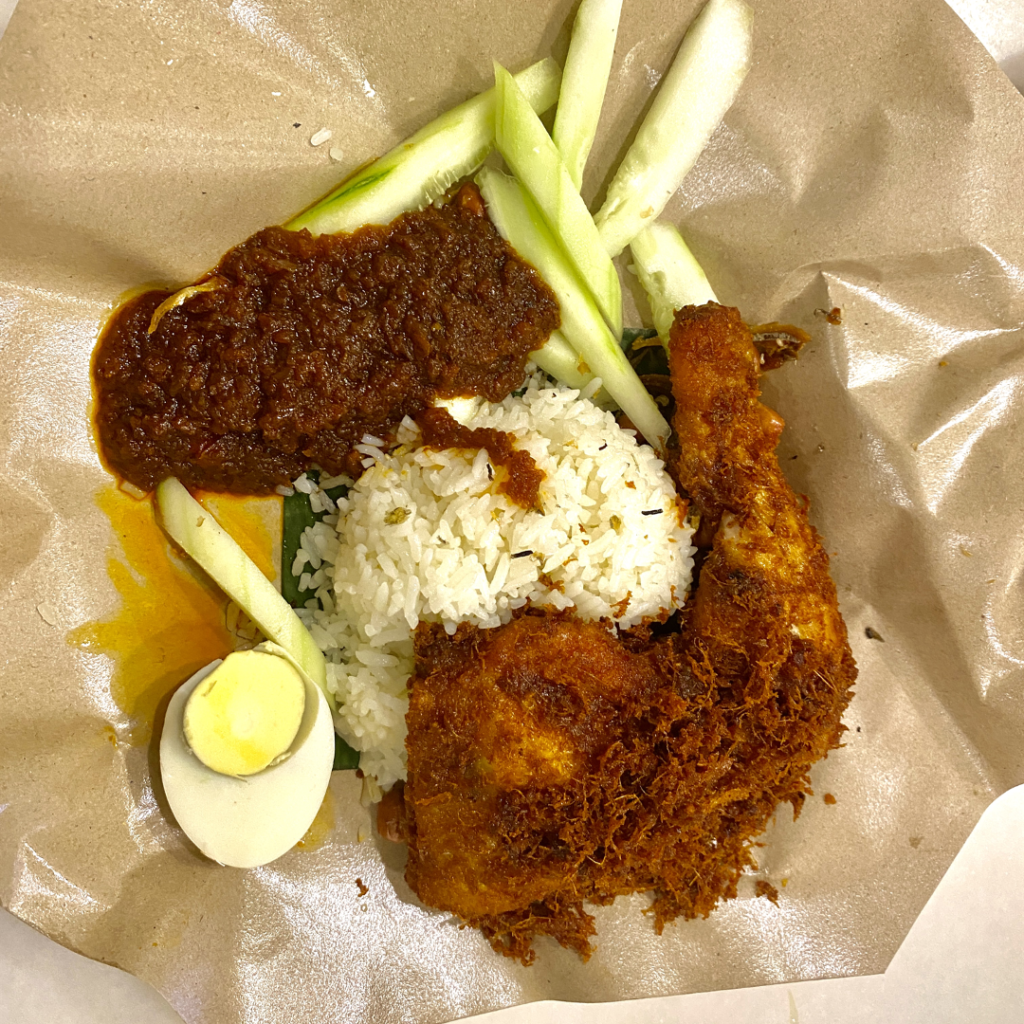
I don’t usually eat a large breakfast. At Village Park in Kuala Lumpur, famous for its nasi lemak, I ordered mineral water and just wanted to taste the dish. That is how I eat most days. I enjoy trying food, but I am happy with a smaller meal.
Nasi lemak at Village Park. One plate, and I was happy.
Healthy Doesn’t Always Mean Tasty
In Sibu, my friend’s mom made herbal chicken soup. It was a bit bitter for me, but it was healthy, so I tried it. That is how I am with food. If something tastes strange to me, I accept it and eat it.
I don’t eat everything, either. A lot of traditional Foochow food is pork-based, so I picked and chose. That is fine. You can skip a dish and still enjoy learning why it exists.
Dinner at an auntie's house in Sibu. Home food always wins.
How I Learned to Eat in Malaysia
The first thing I noticed in Malaysia was the morning stalls. In the morning you mostly see Malay stalls, run by aunties and old uncles. Everyone is on their way to work at that time, so they sell quite well. The Chinese stalls have noodles or something like that, but the Malay ones are far more common.
I tried Chinese food much more when I started having lunch with Chinese friends and colleagues. I really liked their food, and that is how I understood what kind of food options there are here.
Chinese cooking has its own style. To me, Chinese, Japanese and Korean food are more or less the same in pattern, even though each has its own names. Sauce is normal. You cook lightly, add soy sauce or oyster sauce and a little salt, and eat it with some rice. This is the food culture I have adopted the most.
Over the years I have lived with housemates from different backgrounds. I tried what they cooked, and some of those dishes became favourites. Today my usual orders are Tom Yam soup, Chinese fried rice and mixed rice.
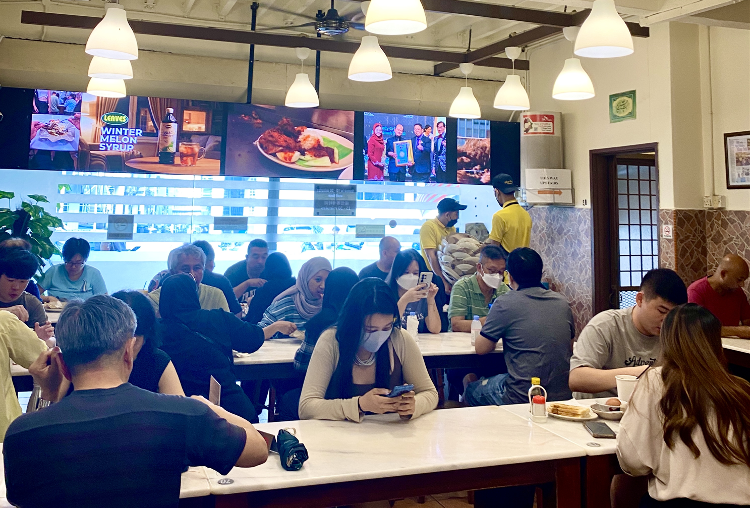
And nasi lemak, of course. I like it at Oriental Kopi and Village Park, and honestly I prefer Oriental Kopi’s. A simple meal at a normal local place usually costs me around RM10 to RM20.
Thailand: Simple Street Food
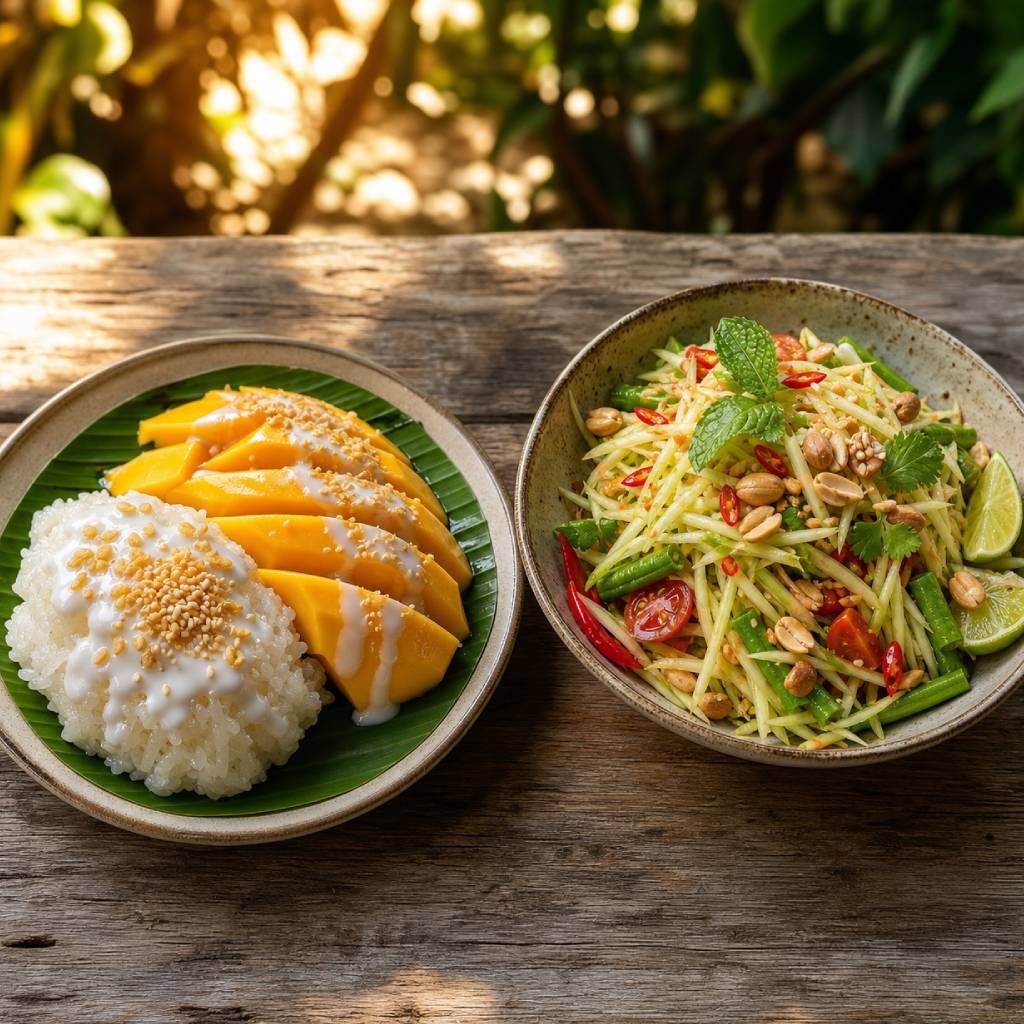
The street food I always remember from Thailand is mango sticky rice and papaya salad, from the stalls behind Silom Road and near Siam Square. Simple, sweet and easy to eat while walking.
Mango sticky rice and papaya salad. Sweet, sour and hot in one meal.
Vietnam: When the Choices Disappear
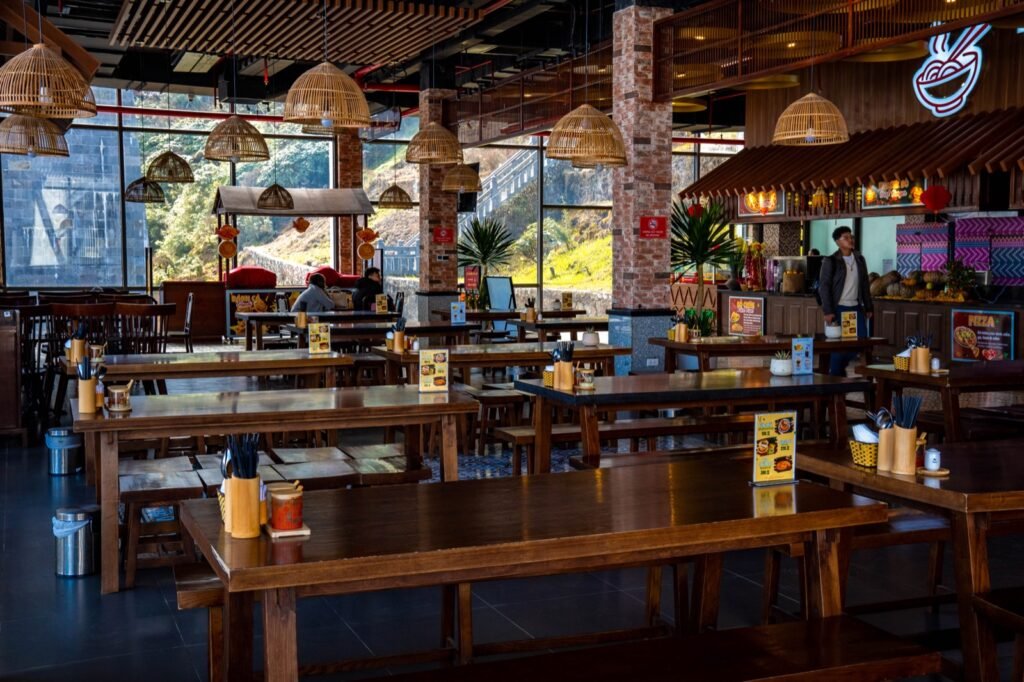
We were in Vietnam during Tết, and most restaurants were closed. We ate a lot of bánh and local dishes. It was tasty, but I missed having choices. If food matters to you, avoid that week.
This is what I do whenever a festival leaves only limited local food and restaurants on a trip. I take anything simple and I don’t eat much. Sometimes fruits are enough.
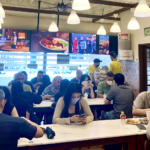
A food hall in Sapa, one of the places that stayed open.
Bali: I Went for the View
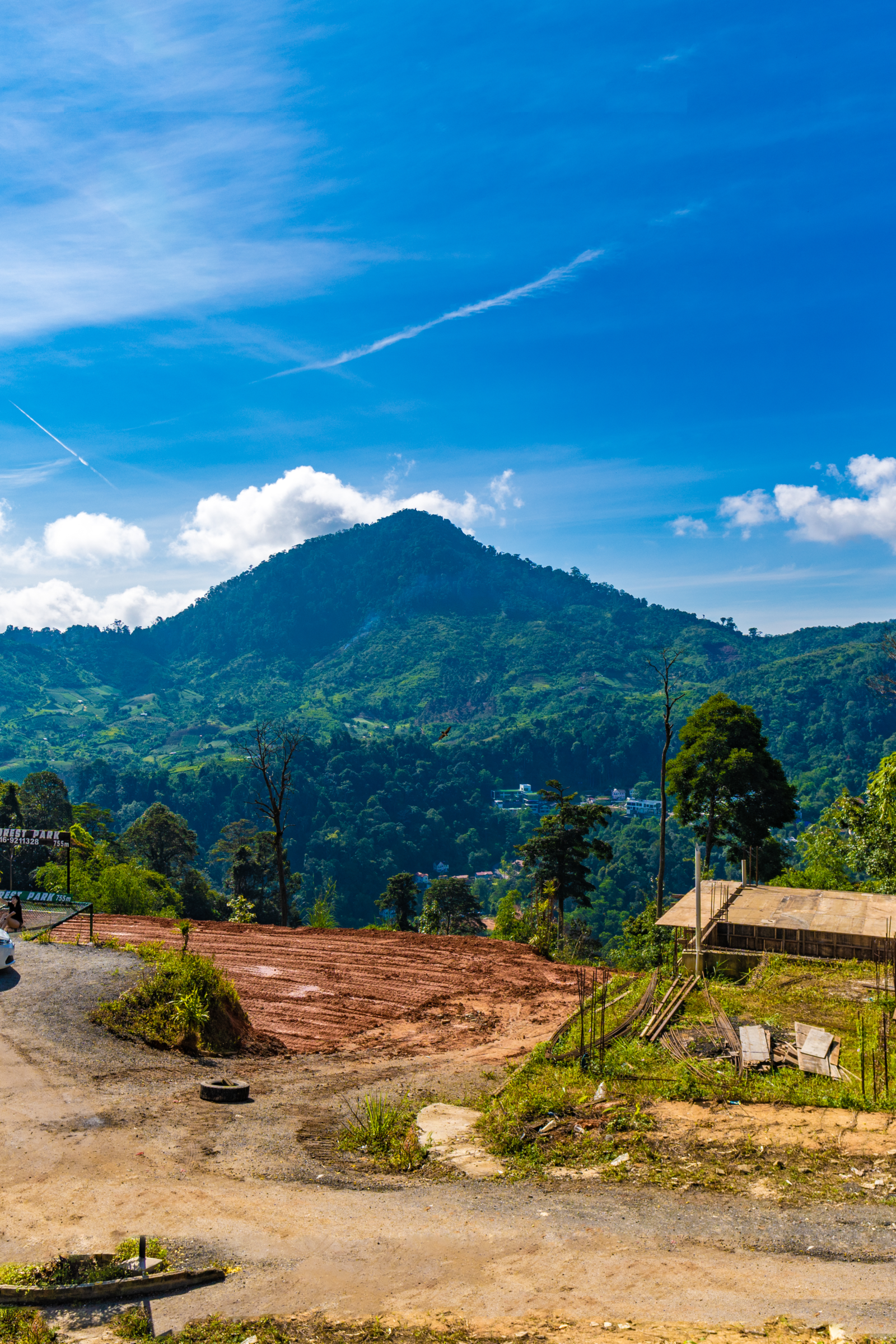
Bali is where you can really see how I eat. At Tis Café we waited about an hour in the rain and ordered a chicken carbonara. At Kintamani the popular café had a long wait, so our driver took us to Paperhills, and I flew my drone instead of paying attention to breakfast.
Paperhills in Kintamani, the café our driver suggested.
At Amarta Penida it was pizza and a soft drink. So yes, I said I like healthy food, and then I ate carbonara and pizza. When the view is the reason you came, you eat what the café has.
Pizza and a blue soft drink at Amarta Penida. Not exactly healthy.
The most refreshing thing I had on that trip was the big coconut on the way back from Tibumana Waterfall.
The big coconut on the way back from Tibumana.
When Plans Fall Apart
In Langkawi, every restaurant had a two-hour queue. So we walked away from the main strip and ate at roadside stalls. On the last night, it was McDonald’s across from our hotel. After climbing Batu Caves, I had simple rice with vegetables. Nothing fancy, and exactly what I needed.
My Simple Rules
Try what local people eat before anything else.
If you are not sure what to order, go for chicken.
Keep it small and light when you can.
If there’s a long queue, walk a little further.
Don’t feel bad about skipping a dish.
If a festival closes everything, eat something simple or just have fruit.
Say yes when someone cooks for you at home.
Final Thoughts
I don’t remember most trips by their food. I remember the people around the table: a family in Sibu, a driver who found us a better café, friends who each wanted something different. Food is simply the reason we all sat down.
We’re three friends who met in Malaysia and turned our love for travel and food into Travel Treat Together. Full-time professionals who never quit our jobs — just found a way to make every trip count.
Travel Treat Together is a travel blog for working professionals who want to see the world without quitting their jobs. Explore destination guides, itineraries and stories from across Asia and beyond.